1st Century AD · UNESCO World Heritage
Roman Circus of Tarragona
325 metres long, 25,000 spectators and chariot racing. The longest Roman circus on the Iberian Peninsula, buried beneath the modern city.
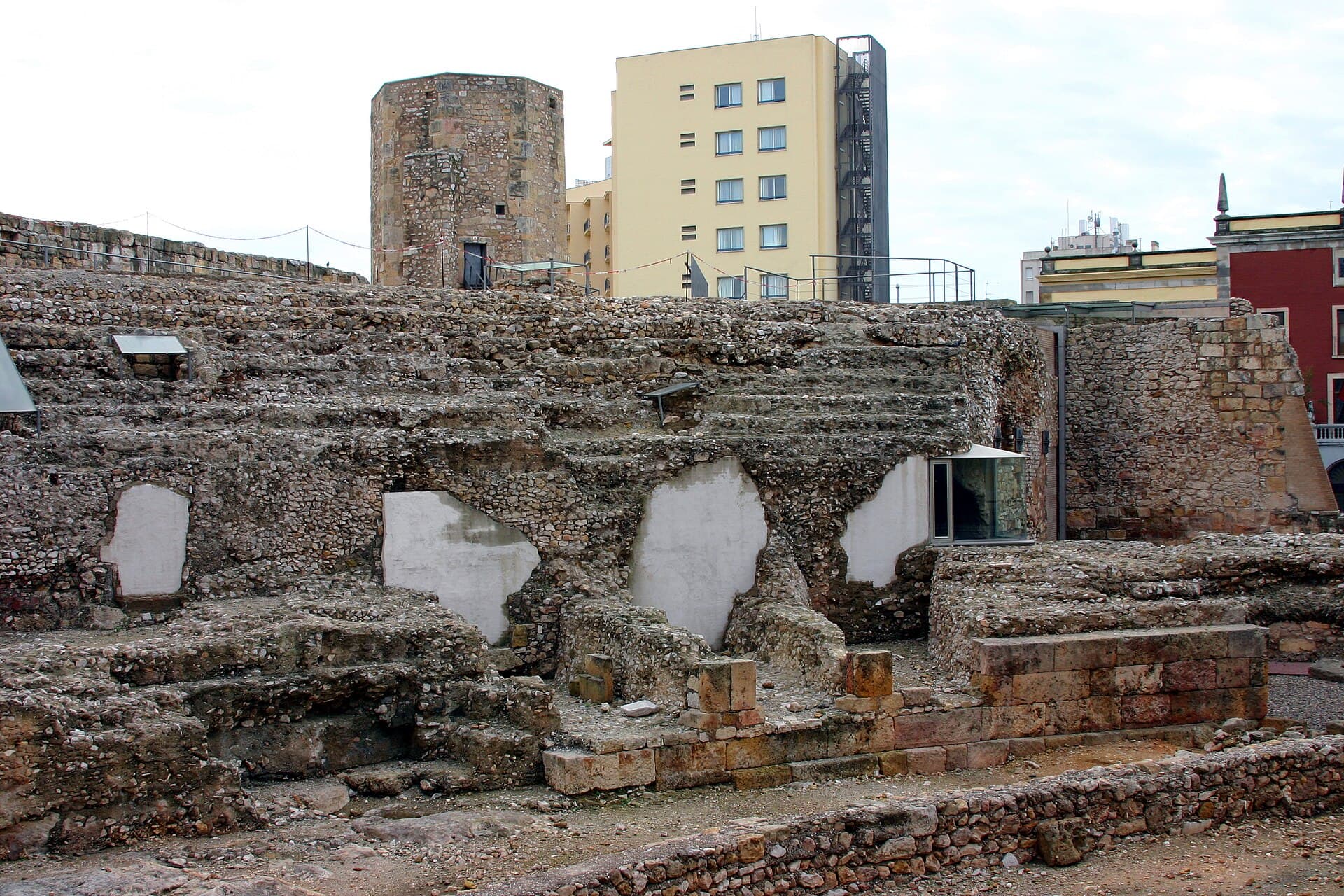
Beneath the Plaça del Rei and the old town of Tarragona sleeps one of the most exceptional Roman monuments in Europe: a 1st-century AD circus measuring 325 metres in length — the longest on the Iberian Peninsula — capable of holding 25,000 spectators roaring at chariot races. What makes Tarragona's circus unique is not just its scale but what has survived: its underground vaulted galleries are the most complete surviving Roman vault in Spain. While the modern city bustled above for centuries, the circus waited patiently in the dark.
The greatest hippodrome in Hispania
325 m
length
25,000
capacity
1st c.
built
115 m
width
The circus was built in the 1st century AD as part of the great monumental complex of Tarraco, capital of the province of Hispania Citerior. At 325 metres long and 115 metres wide, it was the largest circus on the Iberian Peninsula and one of the largest in the western Roman Empire. It held 25,000 spectators who came to watch chariots race at full speed around the central spina. As the Empire fell, the medieval city grew literally over its structures, using the underground vaults as foundations, wine cellars and storage. The Pretori Tower, which rises above the Plaça del Rei, is in fact the western end of the Roman circus, reused as a medieval defensive tower.
Tarragona
Patrimonio UNESCO
Practical information
Opening times
Tue–Sun 9:30–21:00 (summer) · 9:00–17:00 (winter) · Monday closed
Price
€4.50 single · €10 MHT combined ticket (includes amphitheatre, forum and more)
Entrance
Plaça del Rei, s/n — the main entrance is from the square itself
Getting there
10-min walk from Rambla Nova · 5-min uphill walk from the amphitheatre
What to see at the Roman Circus
The underground vaulted gallery
The star attraction. The underground corridor with its barrel vaults is the most complete surviving Roman vaulted structure in Spain. Walking through this 2,000-year-old stone passage, with light filtering down from above, is an experience that surpasses any photograph.
The scale model
A scale model lets you visualise the circus at its height: the 300-metre track, the terraced seating, the central spina with its obelisks and the carceres (starting gates) where charioteers awaited the signal. The model puts everything the modern city has buried back into context.
The Pretori Tower (Torre del Pretori)
The western end of the Roman circus, reused as a medieval defensive tower. From the top you get one of the best panoramic views of the city: the old town, the amphitheatre in the distance and the Mediterranean on the horizon. The climb is part of the visit circuit.
The original vomitoria and access passages
The entry passages used by all 25,000 spectators to reach their seats. The Roman circulation system was so efficient that modern stadiums still use the same principle. Seeing these corridors is understanding how Roman crowd engineering worked.
Visit tips
- →
Enter from the Plaça del Rei: the contrast between the modern medieval square above and the descent into the underground Roman world is one of the most striking moments in all of Tarragona.
- →
The underground circus is cool even in summer — a welcome relief in August. Bring a light layer if you are sensitive to cold.
- →
The circuit is ideal with children: the underground passages and scale model capture young imaginations far better than any guidebook description.
- →
Always buy the MHT combined ticket (€10): it includes the amphitheatre, walls and colonial forum in addition to the circus. The price difference versus individual tickets is significant.
- →
From the Pretori Tower you simultaneously see the ancient circus (below), the medieval town (around you) and the Mediterranean (on the horizon): it is the best visual summary of the city's 3,000 years of history.